
Samsung Galaxy A, S, Z and Other Series Explained
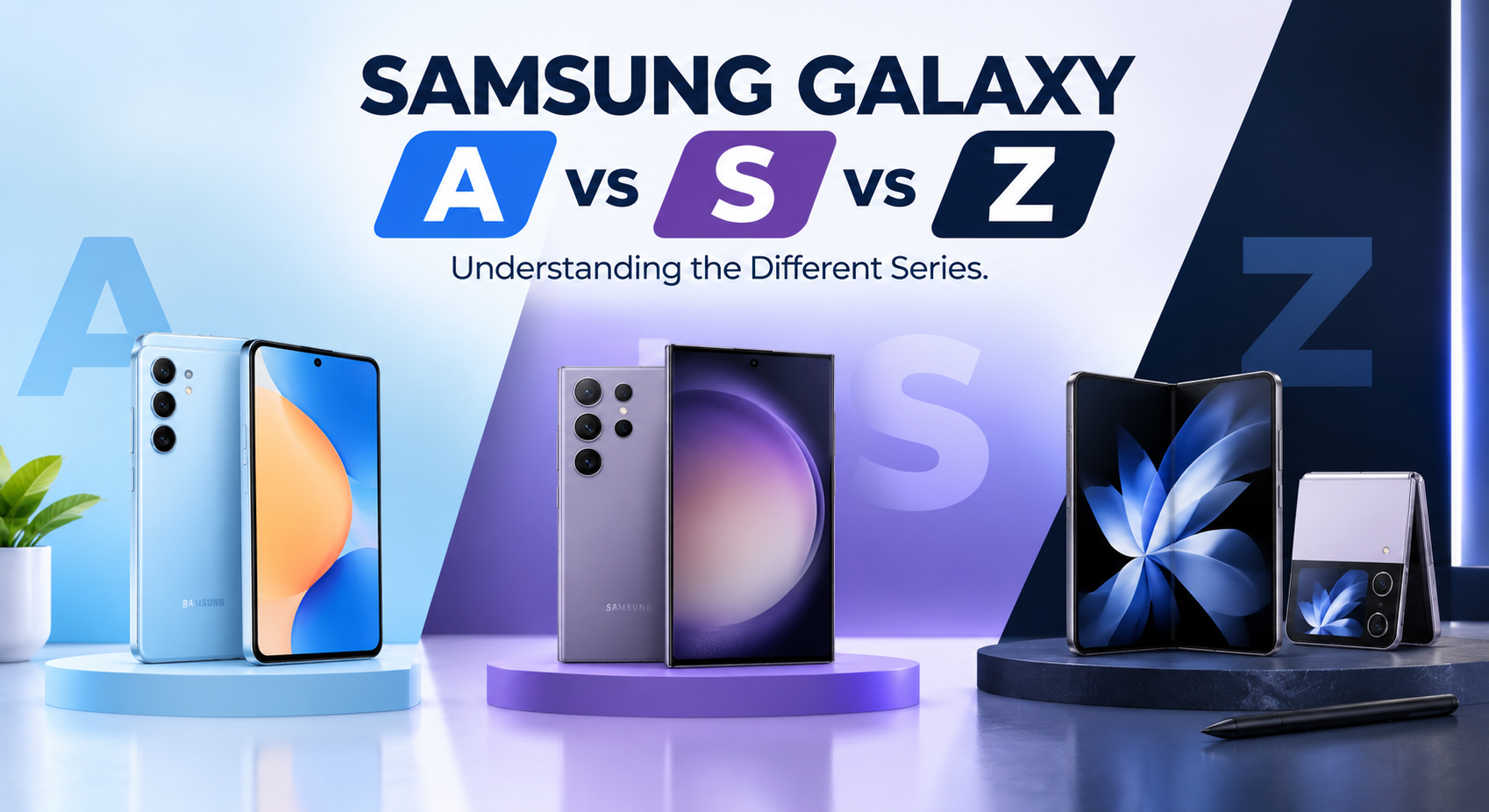
Walk into a shop or scroll through an online store and
Samsung’s lineup can feel confusing: A, S, Z, M,
then a string of numbers. The good news is that the letters tell you a lot. In
most cases, they signal a price tier and a purpose, so knowing what each series
is for makes it much easier to choose.
This guide explains what each Galaxy series offers, who it suits and how to pick the right model, so you don’t end up paying for features you will never use.
1. Samsung Galaxy A Series: Everyday Features at Affordable Prices
The Galaxy A series is a good place to start if you want
a Samsung phone that covers your everyday needs without flagship prices.
These phones are built for texting, social media, online
video, photos and mobile banking. Depending on the model, you can get features
such as AMOLED displays, different camera setups and 5G connectivity. Prices
vary widely: entry-level models offer the basics, while higher-tier ones bring
more advanced specifications.
Who may find this series useful?
- Students
who need a reliable phone for school and communication
- Professionals
who use email, chat and productivity apps
- Casual
users who want the right balance of features and price
- Customers
who want a capable phone without premium extras
If you mainly use your phone for WhatsApp, mobile money, online payments and video, a Galaxy A model should handle it well.
2. Samsung Galaxy S Series: Samsung’s Premium Phones
The Galaxy S series is Samsung’s flagship range,
designed for people who want advanced features, strong performance and a
high-end experience.
S phones typically come with powerful processors,
excellent displays and advanced camera systems that you won’t find in the more
affordable A series. Top models such as the Galaxy S Ultra often add advanced
zoom, bigger screens and productivity-focused features. Specifications vary by
model and generation.
Who should consider it?
- People
who rely heavily on their phone for work
- Those
into photography and filmmaking
- Gamers
who play demanding mobile games
- People
who want advanced features and top performance
If you run an online shop and take product photos, shoot videos for social media or use heavy apps every day, an S model may be worth the investment. But if you mostly make calls, send messages and browse the internet, a flagship is more than you need. Think carefully about whether you will actually use the expensive features before you pay for them.
3. Samsung Galaxy Z Series: Foldable Phones
Have you ever wished your phone could unfold into a
bigger screen when you need more space?
That is what Galaxy Z phones do. Their foldable screens
offer experiences a standard phone can’t. There are two main designs:
- Galaxy
Z Fold:
opens like a book, giving you a larger display for multitasking, reading
documents and running apps side by side.
- Galaxy
Z Flip:
folds into a compact phone that is easy to carry and opens to full size.
Z phones are a strong choice if you want a distinctive design or a larger screen, but they usually cost more than traditional phones. Before buying one, also ask how the folding screen and hinge are covered by the warranty and where repairs would be handled in Ghana, since a foldable is a bigger investment to look after.
4. Samsung Galaxy M Series: Budget Phones With Big Batteries
You may come across Galaxy M phones while comparing
models in different markets or on online platforms. The M series focuses on
practical daily features and large battery capacity at modest prices.
Availability varies by region and country, so you won’t always find the same M models everywhere. If you come across one in Ghana, check its specifications, software compatibility, network compatibility and warranty details before you buy. An M phone is not automatically better than a Galaxy A model, so judge it on its features, not its name.
Samsung Galaxy Series Compared
|
Series |
Main appeal |
Best suited for |
|
Galaxy A |
Everyday features and value |
Students, general users and
professionals |
|
Galaxy S |
Premium performance and cameras |
Power users, professionals and
photography enthusiasts |
|
Galaxy Z |
Foldable design and flexible
screens |
Users who want a larger folding
display or a compact foldable |
|
Galaxy M |
Practical features in selected
markets |
Buyers comparing available
budget-friendly models |
How to Pick the Right Samsung Phone
Knowing the series helps, but the specific model matters
just as much. Before buying, consider these five things:
- Your
budget.
Set an amount you are comfortable with, compare phones within that range
in cedis, and avoid overspending on features you may not use.
- Camera
quality.
If you take many photos or videos, compare camera and low-light
performance. A high megapixel count looks impressive, but it does not
guarantee better pictures.
- Battery
life.
Look at battery capacity, charging speed and independent reviews where you
can find them. Real battery life varies with usage, network conditions and
screen brightness.
- Storage
and performance.
Choose enough storage for your apps, photos and videos. If you game or
multitask heavily, pay attention to the processor and RAM too.
- Warranty, network and software support. Check the warranty, the reliability of the seller and the expected software support. Confirm that the phone works with your preferred mobile network, and check that 5G is available where you live before paying extra for it.
Which Samsung Galaxy Series Is Right for You?
For everyday use, start with the Galaxy A. For a
top-of-the-range phone, look at the Galaxy S. If a folding design appeals to
you, consider the Galaxy Z, and treat the M models as extra options depending
on availability and budget.
At IPMC Kart, we believe buying a Samsung phone starts with knowing what you really need, not with choosing the costliest model.