

Mobile Phones
How AI Features Are Changing Modern Smartphones
IPMC Kart · 16 September 2026
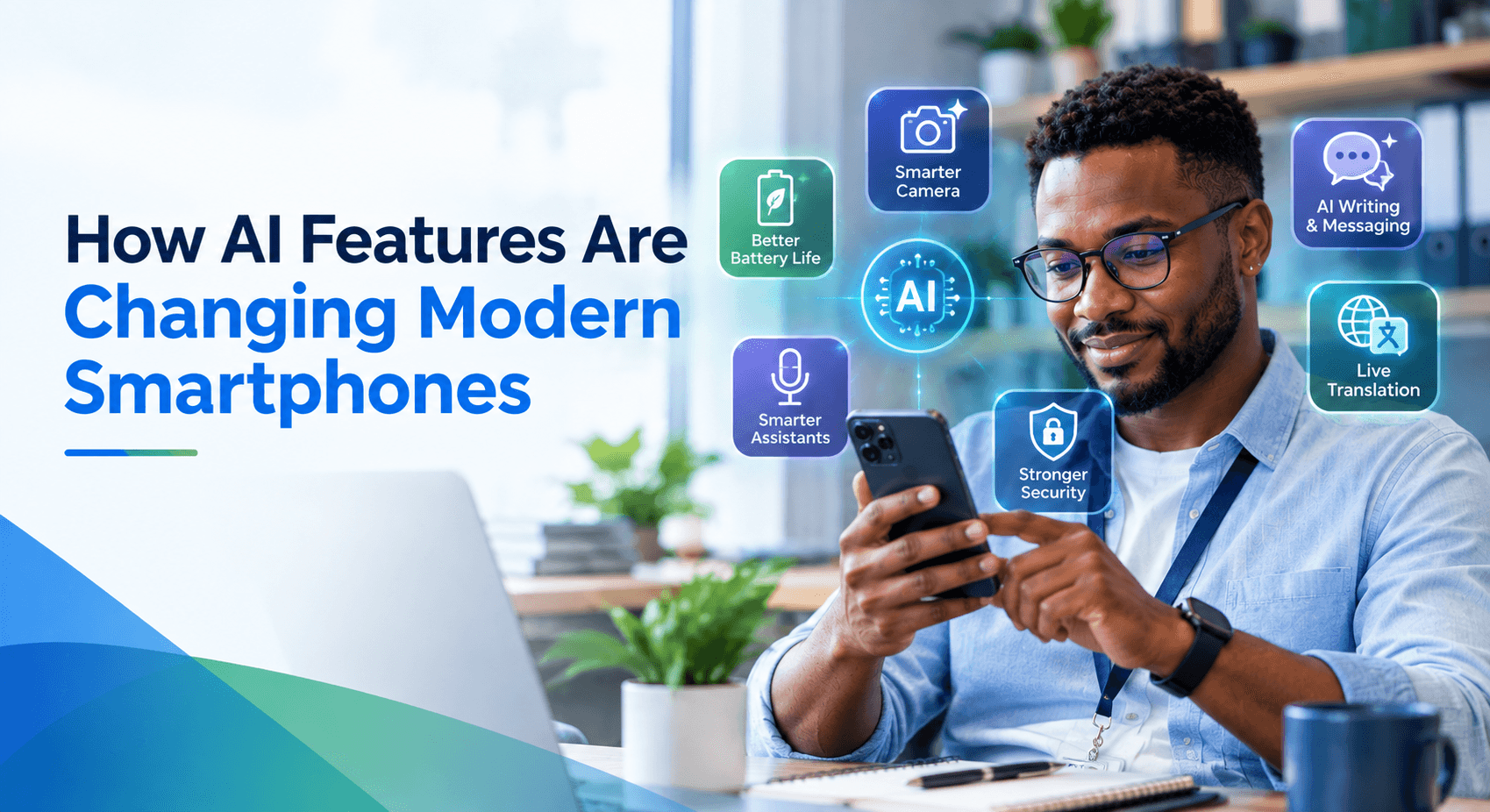
Artificial intelligence has become one of the most important parts of the modern smartphone experience. It is there when your camera adjusts for low light without you touching a setting. It is there when your phone learns your charging habits to protect the battery over time. It is even there when you translate a message, draft a reply to an email, or search for something on the go, often doing the work so quietly you do not stop to notice it is AI at all.For smartphone buyers, this changes everything. Storage, camera quality, screen size and battery capacity still matter. But how well a phone's AI actually performs, how smart it feels, how fast it responds, how much it genuinely helps us day to day, can now be the difference between a good phone and a great one.In this article, we will look at the AI features shaping today's smartphones, what they really do for you, and what to keep an eye on the next time you are choosing a device. First, let us start with the basics: what exactly are AI features?
What Are AI Features on Smartphones?
When we talk about AI on smartphones, we mean the software working behind the scenes to help your phone think a little for itself, recognising patterns, interpreting what you need and handling small tasks automatically.Some AI functions work directly on the phone, while others require an internet connection. Features can also vary between brands, models and operating-system updates.This means buyers should not assume that every phone marketed as an AI smartphone offers the same capabilities. It is important to check the actual features and specifications of a device before buying.1. AI Enhances Smartphone Camera Technology
The camera is one of the most important features for many smartphone buyers. However, getting a good photo is not always easy. Lighting, movement, shadows and background details can all affect image quality.AI-powered camera features like those in recent Apple and Samsung flagship devices can analyse an image and automatically adjust elements such as brightness, colour, sharpness and exposure. Some smartphones can also recognise different scenes and optimise camera settings.This comes in handy when taking photos in different environments, from bright outdoor locations to shops, offices, restaurants and events.AI Photo Editing
Some recent flagship smartphones also include AI-powered editing tools that can remove unwanted objects, improve images or adjust backgrounds. For people who take product photos for online businesses or regularly post on social media, these tools can make simple editing more convenient.However, AI editing may not always preserve every detail of an image. Important photographs should therefore be reviewed carefully before they are shared or used professionally.2. More Efficient Battery Management
Battery life remains a major concern for smartphone users. Streaming videos, gaming, navigation, social media, background applications and poor network conditions can all increase battery consumption.AI can learn from a user's phone habits and help manage background activity. A smartphone may limit activity from applications that are rarely used while prioritising resources for applications that are used more often.This matters if you're often away from a charger. When comparing smartphones, however, AI battery management should not replace checking battery capacity, charging speed and overall power efficiency.3. AI Is Making Smartphone Assistants More Useful
Ask your phone to "remind me to call mom when I get home" and watch it actually understand you. Smartphones have featured voice assistants for years, but AI is helping make them more useful. Some assistants can understand natural speech and help users set reminders, search for information or interact with supported applications.Users may not always need to rely on fixed commands. They can often describe what they want in more natural language. The availability of these features depends on the phone, operating system, language support and internet connection.4. Better Writing and Messaging
Using a smartphone to write emails, messages and social media posts can take time. AI-based writing tools like Gemini and ChatGPT can help with spelling and grammar, adjust the tone of a message, summarise information and create a first draft.For example, someone responding to customer enquiries on WhatsApp can use an AI writing feature to prepare a clearer and more professional reply. AI-generated text should still be reviewed before it is sent because the technology can misunderstand context or provide incorrect information.5. Real-Time Language Translation and Transcription
Ever been stuck trying to read a menu or sign in a language you don't speak? Some modern smartphones offer AI-powered translation and transcription features that can translate text, turn speech into text or create captions.This makes a real difference when travelling, attending meetings or communicating with people from different linguistic backgrounds, particularly where people regularly interact across different languages and communities.Before buying a phone, customers should check which languages the device supports because AI language features can differ between smartphones.6. AI Makes Searching for Information Easier
Finding a specific photo, message or document can become difficult as the amount of content on a phone increases. AI-based search can allow users to search by description instead of remembering exact file names.For example, a user may be able to find a photo based on what it shows or locate information within documents and messages. This is a lifesaver for people who use their smartphones to store business documents, receipts, product photos or personal files.The availability of these features varies by manufacturer and software version.7. Better Calling and Communication Features
Poor call quality, background noise and unclear speech can make communication difficult, especially in busy environments. Some modern smartphones use AI-based call screening and live translation processes to reduce unwanted background sounds or improve voice clarity.This helps a lot in calls made from busy offices, shops, public spaces or while travelling. Depending on the device, additional features may include call transcription, summaries or spam-call identification.8. AI Is Supporting Smartphone Security
If you use mobile money or banking apps on your phone, and let's be honest, who doesn't, AI-powered security matters more than you think. Smartphones already use technologies such as facial recognition, fingerprint scanning and device encryption. AI can support some security systems by recognising patterns and helping identify suspicious activity.This is particularly relevant where smartphones are commonly used for mobile money, mobile banking, online shopping and business communication. In Ghana, where MoMo transactions are part of daily life for millions, this kind of AI-supported fraud detection is becoming just as important as the security features on your banking app.However, AI security features do not replace good security practices. Users should still use strong passwords, screen locks, software updates and multi-factor authentication where available.9. AI Understands What's On Your Screen
Modern smartphones can use AI to recognise information shown on the screen and help users interact with it. Depending on the device, users may be able to summarise written information, locate data, identify a product in a picture or take actions based on what is displayed.For people who use smartphones for work, shopping, education or research, these functions can make the device more useful beyond basic communication.10. AI Is Changing What Buyers Need to Consider
As AI becomes more common, smartphone buyers need to consider more than hardware specifications such as megapixels, RAM and storage. Two phones with similar hardware specifications may offer different software and AI experiences.Before choosing a smartphone, consider:- AI features: What practical AI functions does the phone provide?
- Processor: Is the device powerful enough to run the applications you use daily?
- RAM: Does it have enough memory for multitasking?
- Storage: Is there enough space for photos, videos, applications and documents?
- Camera: Does the camera meet your photography and video needs?
- Battery: What is the battery capacity and charging speed?
- Display: Is the screen suitable for work, entertainment and everyday use?
- Software updates: How long is the phone expected to receive updates?
- Connectivity: Does it support the modern network and connectivity features you need?
- Price: Does the phone provide the right balance between features and your budget?