
No Box, No Clutter: Why All-in-One Computers Are Ideal for Space-Conscious Workspaces
Does your office desk really need to
be crowded with a monitor, a computer tower, a tangle of cables, speakers and
other equipment? For many offices, the answer is no.
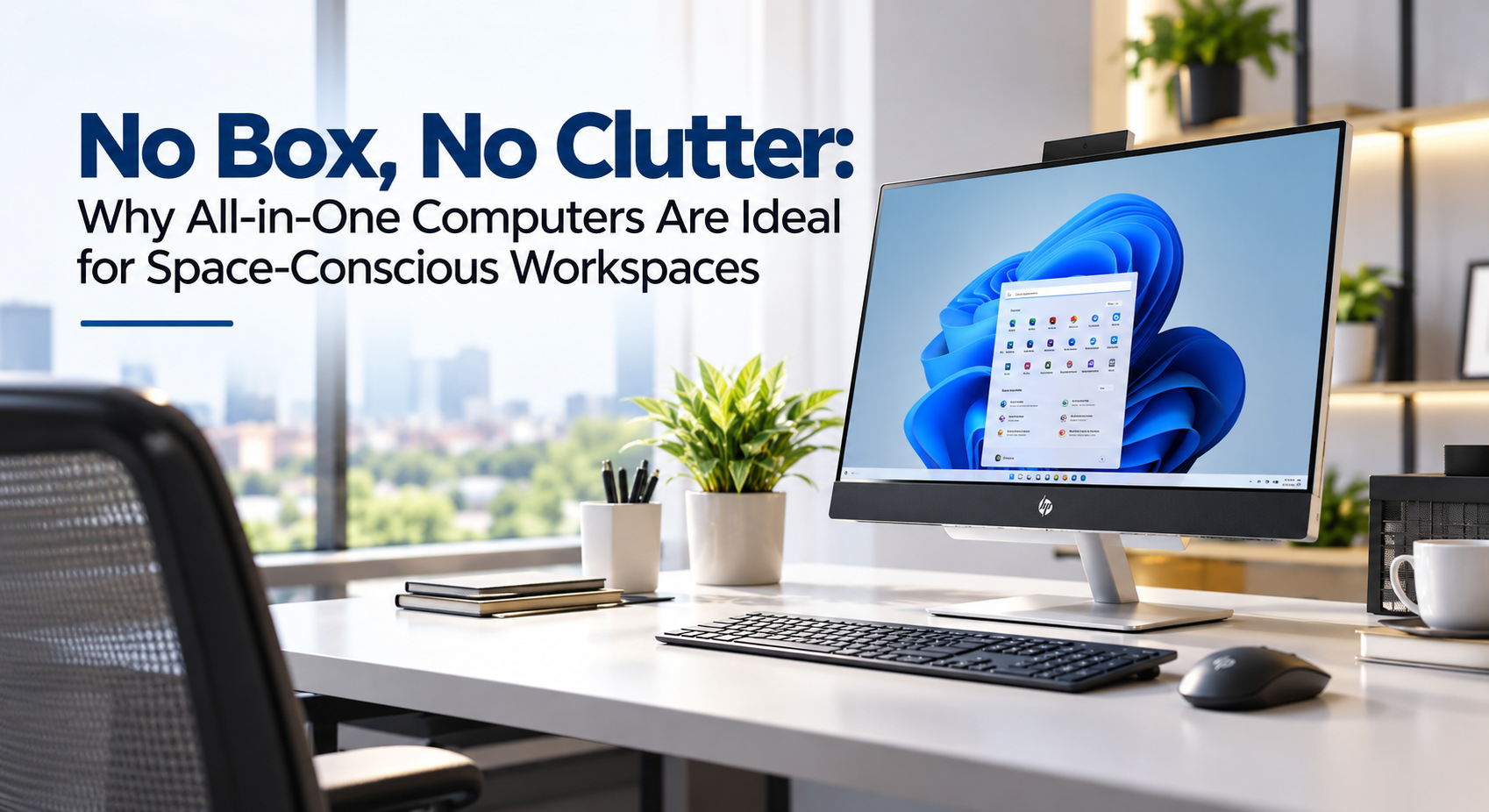
Limited desk space can turn even good technology into a problem. An all-in-one computer solves this by combining the monitor and the system unit into a single unit, instead of a separate screen and desktop tower. The result is less clutter, fewer cables and more usable desk space, and it makes a workspace easier to organise and maintain.
Here is why getting an All-in-One computer is worth considering:
1. It Takes Up Far Less Space on the Desk
The first and most important benefit
is its compact size. A traditional setup needs room for both the screen and the
tower, and the tower alone can take up a lot of space on or under the desk.
In an all-in-one, the components are
built into the monitor, so you get the screen and the computer in a single
product. That leaves more room on the desk for documents and whatever else you
need to work.
In a small office where every centimetre of desk matters, that free space makes a real difference.
2. Fewer Cables Mean a Cleaner, Tidier Workspace
Look behind a typical computer setup
and you'll find a tangle of wires: power cables for the tower and the monitor,
plus connections for the keyboard, the mouse and other accessories.
An all-in-one removes much of this
since the computer is built into the monitor. You'll still need a power cord
and some external equipment, but there are far fewer wires to manage.
With no tower on the desk and fewer visible wires, the overall look is simpler and neater. This matters in reception areas and customer-facing offices, where a tidy first impression counts, and in open-plan offices, where several workstations sit close together. Simple, uniform desks also give the whole office a more consistent appearance.
3. It Is Simple to Set Up
Setting up a traditional desktop
involves connecting several separate parts. With an all-in-one, you place the
unit where you want it, plug it in, connect any peripherals you need, and
you're ready to install your programs and set up your accounts.
This saves time when setting up a new office or replacing several computers at once. It also helps businesses without a dedicated IT team on hand, since there's less to assemble and fewer things that can go wrong during setup, a common reality for many small businesses here in Ghana.
4. It Is Easier to Move Around
An all-in-one isn't especially
light, but moving a single device is still simpler than handling a monitor, a
tower and their cables separately.
This helps during office reorganisations, changes to desk arrangements and moves of equipment between rooms. For businesses that rearrange their offices often, fewer components mean easier changes.
5. It Still Delivers Full Desktop Performance
Choosing an all-in-one doesn't mean
giving up the performance you need. Depending on the model, you can find a
large display, a strong processor, plenty of RAM and fast SSD storage.
This makes it suitable for many
professional tasks: preparing documents, working with spreadsheets, accounting,
putting together presentations, browsing and communicating.
The key is to choose specifications that match the work. A basic office user may not need a powerful processor or lots of memory, unlike someone running demanding creative applications.
6. It Works Well in Reception Areas
Reception desks need to look professional as well as work well. They have to hold a computer, perhaps a printer, documents and other equipment, and still leave room to interact with visitors. An all-in-one suits this setting well: its compact design keeps the desk organised and presentable without sacrificing the performance needed for everyday tasks, which matters for any Ghanaian business where the reception desk is often a customer's first impression of the company.
Is an All-in-One Computer Suitable for Your Workspace?
An all-in-one makes the most sense
when you want the functionality of a desktop without extra equipment taking
over your desk, particularly useful for start-ups and small businesses working
in tight spaces where every square metre counts.
However, it won't suit everyone. If
you need significant hardware upgrades or specialised equipment, a traditional
desktop may be a better fit. Because the screen and the computer are one unit,
a fault in either can affect the whole device, and upgrade options are usually
more limited than with a tower.
The main goal is to match the computer to the job and the workplace, rather than simply choosing the most space-saving option.
What Should You Check Before Buying an All-in-One Computer?
Before you buy, look at more than
just compactness. Check the following:
- Specifications: the processor, RAM and storage
(ideally an SSD). These determine how well it will handle your day-to-day
tasks.
- Screen
size and resolution:
these matter especially if employees will use it for long hours every day.
- Stand
adjustability:
height and tilt adjustment make long working hours more comfortable.
- Connectivity: the number of USB and HDMI
ports, plus Wi-Fi and Bluetooth.
- Upgrade
and service options:
important if you plan to use the device for a long time.
Conclusion
A small office is no obstacle to
good productivity. What matters is arranging the workspace to suit the tasks
you need to perform.
By combining the monitor and the
computer into one device, an all-in-one frees up space while keeping setup and
cabling simple.
At IPMC Kart, we know every office
is different. Before recommending an all-in-one, we make sure we understand your
space, the type of work you'll do, and the specifications that your work
requires.